A Very Short Supply Chain: Following One Cromer Crab from Beach to Bar
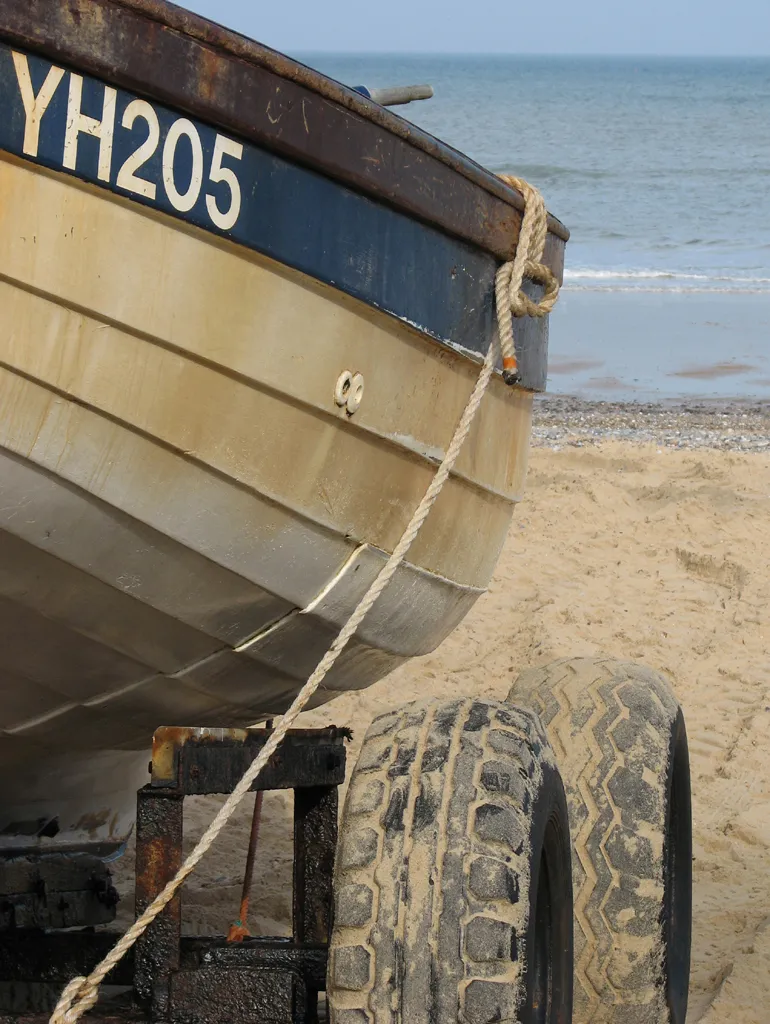
Photo: John Sutton, CC BY-SA 2.0, via Wikimedia Commons
On a bright, cold morning in early November, the beach at Cromer is doing two jobs at once. Dog walkers are wrapped up against the wind, and a few hundred yards away a tractor is reversing a small boat down the sand. There is no deep-water harbour here. The inshore fleet works from the beach, which is part of the town's charm and part of its problem. You cannot load a boat at Cromer the way you can at a port with a quay and a crane. You wait for the tide, you watch the swell, and you take your chance.
That is the first thing to understand about Cromer crab. It is not a product that arrives on a schedule. It arrives when the weather allows, in the quantities the sea provides, and the kitchen at The Albion has to work with that reality rather than against it.
The beach is the harbour
The boats that fish out of Cromer are small, often crewed by one or two people. They are launched and recovered across the sand, which means every trip is a small logistical operation before a pot is even hauled. On a good day it looks effortless. On a bad day it is cold, wet and expensive.
One skipper I spoke to, who has fished out of Cromer for more than two decades, put it simply: 'You look at the forecast before you look at anything else.' That is not a line from a tourist brochure. It is the whole trade in one sentence. A week of northerlies can keep the fleet ashore. A settled spell in November can produce a run of crab when visitors have stopped expecting it. The season is not a switch. It is a series of windows.
What makes a Cromer crab a Cromer crab
It is the same species you will find elsewhere in the North Sea — the brown crab, Cancer pagurus — but the name carries a place and a method. The crabs are taken in pots from small boats, often within sight of the town, and landed on the same beach where people are eating ice cream in August. Cold water, a natural diet and a short chain from seabed to kitchen all help. The white meat is sweet and firm; the brown meat is rich and deep. Anyone who has eaten a bland, watery crab sandwich will understand the difference.
The fishery is not a factory. The crabs are graded, cooked or sold live, and the best of them go to local buyers who know what they are looking at. That is why a pub in Cromer can serve something that tastes of the place rather than of a supply contract.
From the cool box to the kitchen
At The Albion, crab is not a commodity to be stretched. When the catch is light, the specials board reflects it. When the boats have had a good run, the kitchen makes the most of it. You might see a crab sandwich on granary, a crab salad with pickled fennel, or a warm crab tart with a sharp little salad. In colder months, a bisque or a crab rarebit can make sense of the brown meat. The point is not to promise the same dish every day. The point is to cook what is actually there.
That approach has a practical consequence for customers. The specials board is written after the catch is known, not a week before. If crab is the reason for your visit, ring ahead on the day. At weekends, crab sandwiches can sell out by mid-afternoon. In winter, availability is genuine rather than guaranteed. Ask at the bar what came in that morning. And do not be disappointed if the answer is 'not today' — that is the whole point of buying local.
Why buying local matters here
Cromer is a coastal town with a working fishing tradition, and the inshore fleet is part of its identity. Money spent on local crab stays in the town. It supports the skippers, the buyers and the people who pick and pack the meat. It also keeps the supply chain short, which means fresher crab, fewer food miles and a menu that tastes of the season rather than of the freezer.
There is a wider argument too. A pub that buys locally is voting for a certain kind of town — one where the beach is not just a view, but a workplace. The Albion is not a fishmonger and we are not pretending to be. But when we put Cromer crab on the menu, we are part of that chain. The crab travels a few miles, not a few hundred.
So the next time you settle in by the fire with a crab sandwich, consider the journey. It started before dawn, on a beach, with someone squinting at the forecast. That is a very short supply chain — and a very good reason to order the crab.