A Spoonful of January: Cromer's Marmalade Swap and the Pub Larder
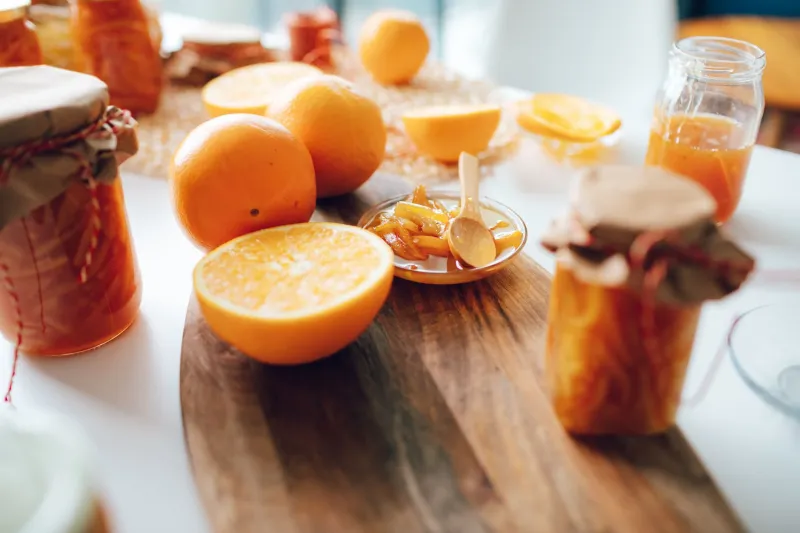
January has a way of exposing the Christmas overspill. The tin of biscuits nobody opened. The third box of chocolates. And, in many Cromer kitchens, the marmalade mountain: jars made in a fit of seasonal enthusiasm, jars received as gifts, jars with handwritten labels that say things like 'too much peel, sorry'. Rather than let them sit at the back of the cupboard until next December, The Albion is giving them somewhere to go.
On the first Saturday after New Year, the pub holds its January marmalade swap. It is not a market, and it is not a competition. It is a table by the fire, a stack of toast, a pot of tea, and a room full of people who have strong opinions about shred size. Bring a jar, take a jar. Bring surplus Seville oranges if you have them. Bring nothing at all if you just want to see what all the fuss is about. The only rule is that anything you put on the table is labelled with what it is and when it was made. After that, it is down to the room.
How the morning works
The swap runs from 10am to 1pm, though the first pots of tea are usually on the go by half nine. You do not need to book. You do not need to bring a prize-winning preserve. A jar of homemade marmalade, a bag of Seville oranges, or a willingness to help butter toast are all welcome. The kitchen sets out a few loaves from the bakery, a tub of butter, and a toaster that has seen better days but still does the job. Around the table, people compare notes: who used whisky, who went heavy on the lemon, who tried a thermometer and who trusted the wrinkle test.
The swap itself is deliberately loose. A jar goes in, a jar comes out. If you have more than you can reasonably eat, you leave the extra. If you have none but want to learn, you take one and promise to bring one next year. The kitchen takes a few jars for the week's specials, and the rest go to Cromer's food bank. The table usually fills three crates. The pub is hoping for four.
What makes a good marmalade
Marmalade is a simple thing that is easy to get wrong. Seville oranges are the classic choice because they have the right bitterness and enough pectin to set, but they are only around for a few weeks in January. That short season is part of why the swap exists. People buy a box, make a batch, and then realise they have made enough for a small hotel. The swap turns that surplus into something shared.
A good marmalade starts with a good soak. The fruit needs time, often overnight, and the shreds need to be cut to a size you actually want to eat. Too thick and it is chewy; too thin and it disappears into the set. The set itself is the tricky bit. You can test it on a cold saucer, or use a thermometer, but the real test is whether it wobbles rather than runs. And it should taste of more than sugar. The bitterness should be there, but it should not be a punishment. A squeeze of lemon at the end can lift it. A splash of whisky can be nice, but it can also overpower the fruit if you are heavy-handed.
At the swap, there is no scoring. But there is a lot of quiet assessment. The jar with the neat label and the evenly cut peel tends to disappear first. The jar that says 'experimental' tends to be taken by someone who wants to know what went into it. Both are welcome.
A pub as a neighbourhood larder
There is a practical reason a pub works for this sort of thing. It has a kitchen, a big table, and a reason for people to come in during the quiet weeks of January. But there is a less practical reason too: a pub is a place where things get left. A coat, a set of keys, a book. A jar of marmalade fits that list. It is a small act of trust to leave something you made on a table and see it go home with someone else.
That trust is what makes the swap work. It is not a food bank collection, though it supports one. It is not a cookery class, though people learn things. It is a morning where the pub does what it does best: it gives a neighbourhood a room. The marmalade is the excuse. The toast is the incentive. The tea is the constant.
For the kitchen, the swap is also a useful thing. A few jars of marmalade become a glaze for the week's specials. It works on roast ham, on sausages, on a tray of parsnips. It can go into a bread and butter pudding or a treacle tart. The point is not to turn the pub into a preserve factory. The point is to use what is already there. A jar that would have sat in a cupboard becomes part of a plate. A box of Seville oranges that would have gone soft becomes a batch of something shared. That is thrift, but it is also good cooking.
How to join in
If you want to take part, the practical bits are simple. Bring a jar of homemade marmalade, or a bag of Seville oranges, or both. Label your jar with the fruit, the date, and anything unusual, such as alcohol or spices. Bring a small donation for the food bank if you can. Arrive before 11am if you want first pick. Stay for toast. If you have never made marmalade, come anyway. There will be recipes on the tables and people who are happy to talk you through the wrinkle test.
The swap is also a good place to ask questions. What went wrong with the set? Why did the peel turn dark? Can you use frozen Seville oranges? The answers are usually practical and occasionally contradictory, which is part of the fun.
January can be a thin month. The pub is quieter, the days are short, and the leftovers are starting to feel like a chore. A marmalade swap does not solve any of that. But it does make a morning of it. It turns a cupboard problem into a table of jars. It gives the food bank a few crates of something good. And it reminds people that a pub can be more than a place to buy a pint. It can be a larder, a meeting room, and a toaster all at once.
If you have a jar with a handwritten label, bring it. If you have a jar with no label, bring it anyway and we will guess. The kettle will be on.